

















Holi is pure magic. The laughter, the music, the clouds of gulal, the plates of gujiya being passed around — there’s nothing quite like it. But if you share your home with a dog, cat, or rabbit, you already know what’s coming: the dread that quietly settles in a few days before the festival. The frantic barking at fireworks next door, the neighbour’s kid who thought it was “cute” to smear colour on your Labrador, the frantic Google search at 11 PM — “is Holi colour toxic for dogs?”
This guide is for you. Not a generic listicle. A real, practical, checklist-style resource built specifically for Holi 2026 — because Indian pet parents deserve better than copy-pasted advice that doesn’t account for our chaotic, colourful, beautiful reality.
Why Holi Is Genuinely Dangerous for Your Pet (Even If You’re Careful)
Here’s the thing most pet owners don’t realize: you don’t have to actively put your dog in harm’s way for Holi to hurt them. The danger is ambient. It drifts through open windows. It clings to your clothes when you come home after playing. It gets tracked in on the soles of your chappals.
The scale of risk depends on where you live. Pets in independent houses in residential colonies face different challenges than those in DDA flats or gated societies. If your RWA throws a massive Holi bash in the common area right outside your door, your dog’s stress levels are going to spike regardless of what you do indoors. So let’s break it down — danger by danger.
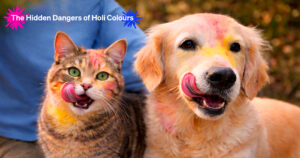
The Hidden Dangers of Holi Colours — Even the “Herbal” Ones
Why “Natural” and “Herbal” Labels Don’t Mean Safe
Walk into any market before Holi and you’ll see packets screaming “100% Natural!” and “Eco-friendly Herbal Gulal!” Don’t let that fool you. Regulation of these claims in India is inconsistent at best. Many so-called herbal colours still contain:
- Lead oxide — a heavy metal that accumulates in the body and causes neurological damage
- Mercury sulphite — known to cause kidney and liver failure in concentrated exposure
- Silica — causes respiratory damage when inhaled
- Industrial dyes — linked to skin sensitization and chemical burns, especially on mucous membranes
For a 30 kg Labrador, this might cause temporary irritation. For a 5 kg Shih Tzu or a cat, the margin for harm is far smaller.
The Grooming Trap
This is the danger most pet owners completely miss. Dogs lick themselves. Cats are fastidious groomers. The moment colour lands on your pet’s coat, they start ingesting it. Even a small amount of colour on a paw pad can end up in the digestive system within minutes. This is how pets end up vomiting or showing neurological symptoms hours after exposure — not from direct ingestion, but from routine grooming.
Respiratory Distress in Pets: Real and Underreported
Dry gulal is essentially fine particulate matter. During Holi, the air in many Indian neighbourhoods — especially in Delhi, Jaipur, and Mumbai’s older residential areas — is visibly coloured for hours. Pets with short snouts (Pugs, French Bulldogs, Persian cats) are at highest risk of respiratory distress. But even healthy dogs can develop coughing, watery eyes, and laboured breathing from prolonged exposure to colour-saturated air.
| ⚠️ Quick Check
If your pet is sneezing repeatedly, rubbing their face on the floor, or making unusual wheezing sounds after Holi exposure, don’t dismiss it as “just dust.” These are early warning signs. |
Building a Safe Zone Before the Colours Fly
Start Preparation Two Days Before Holi
Don’t wait until the morning of. By then, your neighbours have already started warming up, the dhol is out, and your dog is pacing. Preparation starts 48 hours before.
The Physical Setup:
- Identify one room — ideally an interior room away from the street — as your pet’s sanctuary for the day
- Close windows and use curtains or blackout blinds to reduce visual stimulation
- Run a fan or air purifier to maintain air circulation without pulling in outdoor particulates
- Place your pet’s favourite mat, toys, and a worn item of your clothing (your scent is calming) in the room
Managing Noise and Anxiety:
White noise is your best friend. A simple ceiling fan, a dedicated white noise machine, or even a YouTube “brown noise for dogs” playlist can mask the sounds of Holi celebrations significantly. Brown noise tends to work better than white noise for deeper, more resonant sounds like drums and loud crowds.
If your dog is already prone to anxiety around festivals like Diwali, Holi is going to be equally stressful. Don’t wait for them to spiral. Consider Snackers Treats — available as chews — that can be started 24 hours before the festival for best effect. These will keep the Pet engaged and anxiety free.
Exercise Strategy:
Walk your dog early. Very early. The 5:30–6:30 AM window on Holi morning is usually still calm. A good long walk before the festivities start means your dog enters the day already tired and relaxed. That matters.
A Holi-Day Checklist for Pet Parents
- Identify and prepare the safe room by the night before
- Stock up on fresh water — keep two extra bowls in the safe room
- Pre-stock calming treats or aids
- Inform household help not to open the main door without checking for the pet first
- Notify guests in advance that your pet is not to be coloured — ever
- Keep your vet’s emergency number saved on your phone
The “No-Holi” Diet — What Not to Feed Your Pet Today
Holi food is wonderful. It’s also quietly lethal for pets. Here’s a specific breakdown of what’s on almost every Indian household’s table during Holi — and why your pet must not eat any of it.
Gujiya
The quintessential Holi sweet. Made with maida, khoya, dry fruits, and sugar — every single one of those ingredients is problematic for dogs. The khoya is high-fat (pancreatitis risk), the dry fruits often include raisins (severely toxic to dogs — can cause acute kidney failure even in small amounts), and the sugar spikes blood glucose dangerously in diabetic or overweight pets.
Thandai
This one is underestimated. Thandai itself is already not ideal for pets. But the version served at Holi parties often contains bhaang (cannabis). Cannabis toxicity in dogs is a genuine emergency: symptoms include disorientation, dilated pupils, drooling, loss of bladder control, and in severe cases, coma. Keep thandai completely out of reach. Also, many store-bought thandai mixes contain xylitol, an artificial sweetener that causes a catastrophic drop in blood sugar in dogs and can cause liver failure. Check every label.
Dry Fruits and Nuts
- Raisins and grapes — potentially fatal for dogs in any quantity
- Macadamia nuts — cause weakness, hyperthermia, and vomiting
- Almonds and cashews — not acutely toxic but high in fat; can trigger pancreatitis
Namkeen and Fried Snacks
High in salt, oil, and often onion powder or garlic. Onion and garlic in any form — raw, cooked, or powdered — cause haemolytic anaemia in dogs and cats. Even small amounts of garlic over time are toxic.
| 🐾 Pro-Tip
Instead of letting your pet feel left out of the festive food, pick up some Snacker treats before Holi. These are specially formulated to be safe, delicious, and festive-appropriate — so your dog gets to celebrate too, without the vet visit afterward. |
Emergency Response — What to Do If Your Pet Gets Coloured
It happens. Even with the best precautions, a family member opens the wrong door, a neighbour throws colour over the gate, or your dog bolts outside during the celebration. Here’s exactly what to do.
Step-by-Step: Removing Holi Colour from Dog Fur
- Stay calm. Your panic transfers to your dog instantly. Take a breath.
- Do not use human shampoo, dish soap, or acetone. These strip the natural oils from your pet’s skin, cause dryness, and can worsen irritation. If colour is near the eyes or mouth, use a damp soft cloth first to gently blot — not rub.
- Wet your dog thoroughly with lukewarm water. Not cold (shock risk), not hot (burns). Lukewarm. Allow the water to penetrate the coat before applying anything.
- Apply a pet-specific, pH-balanced shampoo. This is non-negotiable. Try Aroma Groom, shampoos which are formulated for the Indian climate and coat types — from double-coated Huskies to short-coated Beagles. Work the shampoo through the coat gently, paying special attention to paws, between toes, and around the muzzle.
- Rinse thoroughly. Colour and shampoo residue are both irritants. Rinse until the water runs completely clear.
- Dry properly. Towel dry first, then use a pet-safe blow dryer on the lowest heat setting. A damp coat in an air-conditioned room can cause your pet to chill.
- Check paw pads, ears, and eyes. These are the areas where colour does the most damage. Gently wipe ears with a damp cotton ball. If eyes are red or your dog is pawing at them, use sterile saline eye drops.
When to Rush to the Vet — No Waiting, No Watching
Go immediately if you notice any of the following:
- Vomiting more than once, or vomiting blood
- Lethargy — your dog won’t get up or seems confused
- Persistent red, swollen, or tearing eyes
- Laboured breathing or open-mouth breathing in a dog
- Pawing at the face or mouth repeatedly
- Seizures or loss of coordination
- Excessive drooling combined with any other symptom
- Pale or blue-tinged gums (this is a crisis — go now)
Keep your vet’s number and the nearest 24-hour veterinary emergency clinic number in your phone contacts before the festival. In most major Indian cities, there are now emergency vet services that operate through the night. Don’t assume your regular clinic will be open on Holi.
A Word for the Strays — Because They Deserve Better
Not every dog has a home to retreat to. The neighbourhood strays who’ve been peacefully living in your colony all year suddenly find themselves in the middle of an alien, terrifying situation during Holi. Colour is thrown at them “for fun.” They have nowhere to hide.
If there are regular strays in your area, spend five minutes before the festivities begin to move them — with food as incentive — to a quieter corner of the colony: a parking basement, a shaded area behind a building, or any space that’s slightly more shielded from the main celebration.
Leave a bowl of fresh water where they usually rest. Colour-contaminated water is a real hazard, and strays will drink whatever’s available. If you’re part of your RWA group or colony WhatsApp chat, drop a message before Holi asking residents not to throw colour at stray animals. Most people aren’t malicious — they just don’t think about it. A gentle reminder goes a long way.
If you find a stray who has been heavily coloured and is showing signs of distress, contact your nearest animal welfare organisation. Organizations like Friendicoes, CUPA, and Jeevashram operate in major cities and can advise on emergency assistance.
Your Holi 2026 Pet Care Checklist — Print It Out
Before Holi (48 hours):
- Set up safe room with bedding, water, toys
- Start calming aids if your pet is anxiety-prone
- Stock pet-specific shampoo and wipes
- Save emergency vet number
- Walk your dog early on Holi morning
During Holi:
- Keep pets indoors with doors and windows shut
- Run white noise in the safe room
- Do not share festive food with pets
- Brief all family members and guests on rules
After Holi (if exposure occurred):
- Bathe with lukewarm water and pet-specific shampoo
- Check eyes, ears, and paw pads carefully
- Monitor for 12–24 hours for symptoms
- Call vet if any warning signs appear
Stock Up Before the Rush
Holi 2026 falls on March 4th. Pet care products sell out in the days before the festival — don’t leave it to the last minute. Head to JustDogs Store and pick up:
- Aroma Groom Shampoo — for post-Holi colour removal and sensitive skin
- Pet Calming Aids — chews and drops to keep anxiety manageable through the celebration
- Pet-Friendly Treats — so your dog doesn’t feel left out of the festivities
- Grooming Wipes — for quick clean-ups when a full bath isn’t possible
Your pet doesn’t understand Holi. They only understand how they feel — safe, or scared. With a little preparation, you can make sure it’s the former.
From all of us at JustDogs: Happy Holi to you, and a calm, safe, colourful day to your pets. 🐾
Disclaimer: This blog is intended for general pet care guidance. Always consult your veterinarian for advice specific to your pet’s health, breed, and medical history.
Tags: Holi pet safety tips | dog care during Holi | toxic Holi colors for pets | how to remove Holi color from dog fur | safe Holi treats for dogs | justdogs pet care | chemical-laden gulal | respiratory distress in pets | stray animal safety | natural colors